Across all eight evaluations, a consistent pattern of change emerges. When people feel safe, they can regulate their emotions. When regulated, they form connections. And through those connections, they begin to reclaim agency and voice. This progression — safety → regulation → relationships → agency — is not incidental; it is the logic built into everything Amna does.
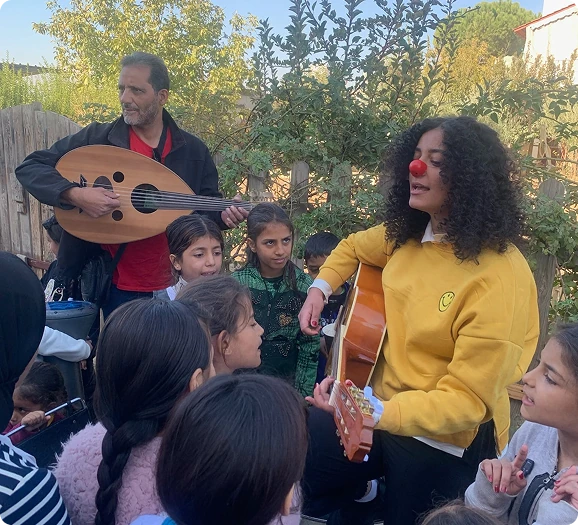
Adults who engaged with Amna’s programmes described profound experiences of emotional relief, identity affirmation, and belonging. Participants in Poland and Greece spoke about renewed purpose; in Ukraine and Moldova, people normalised conversations about mental health and began sharing tools with neighbours. The ripple effect, participants carrying practices back into their households and communities, was documented across virtually every evaluation context.

This foundational evaluation traces Amna’s evolution from a direct service provider in Greece into a capacity-building organisation operating globally. Conducted against the backdrop of rising global displacement, an increasingly hostile environment for refugees in Europe, and the COVID-19 pandemic, it documents how Amna identified a significant gap in non-clinical mental health support and built a strengths-based response.
By 2021, Amna had directly reached approximately 11,000 people, with an indirect reach exceeding one million through programming, social media, and advocacy. The evaluation affirmed the long lasting impact of early childhood interventions through the Baytna programme, and the personal and professional transformation achieved through the Dinami youth programme. It also documented Amna’s rapid adaptation to COVID-19: online resources were accessed more than 175,000 times, and digital youth projects provided genuine connection and respite during lockdown.
The evaluation affirmed that Amna had met its intended objectives for the review period and recommended that the organisation develop a clear strategy for scaling with adequate infrastructure. That strategy, positioning Amna as a global leader in championing and serving refugee communities, has since been developed and is being implemented.
This evaluation reviewed Amna’s Baytna Hub initiative, which funded, trained, and supported local organisations to deliver early childhood development (ECD) programming for refugee children and caregivers, implemented between 2020 and 2022.
Baytna’s approach was found to be strongly aligned with an evidence base on safe, stable, and nurturing relationships for children’s development, and to meet critical gaps: safe spaces, psychosocial support, caregiver community, and access to educational opportunities for children unable to access the public school system. Amna’s training was assessed as excellent, drawing on best practices from teaching, social work, and counselling, and the programme was cited as an example of best practice by leading international ECD organisations.
The evaluation also raised honest challenges. Amna was more successful in changing individual facilitators than in driving institutional change at the organisational level, particularly where transformation required confronting existing power dynamics. Sustainability of the Baytna model beyond the grant period also proved challenging, with none of the pilot organisations able to continue independently. These findings have directly informed how Amna designs and structures its Community Partnership Programme today.
In August 2021, Amna mounted an emergency fast-track training initiative for six partner organisations in Albania, Italy, and Kosovo, responding to the displacement crisis following the withdrawal of US and NATO forces from Afghanistan. The programme was delivered between December 2021 and June 2022, including two multi-day virtual trainings and regular capacity building follow-up calls. Collectively, partner organisations supported 844 participants, approximately 58% of whom were female.
Participants reported significant increases in their understanding of identity-informed, trauma informed, and values-based practice. The training either met or exceeded expectations, and partners incorporated its approaches into both their direct work with refugees and their support of their own staff. Five of the six organisations engaged Afghan community members in active programme roles, including facilitation, outreach, translation, and material creation – reflecting the participatory ethos of Amna’s model.
The evaluation identified participation as a practical challenge; a multi-day virtual format proved demanding for staff simultaneously managing fieldwork and emergencies, and funding sustainability as an ongoing structural barrier. Despite these constraints, partners remained deeply invested in ongoing connection with Amna, a testament to the quality and relevance of the programme.
This qualitative mapping review explored whether services in Pakistan were able to respond to the needs of the Afghan refugee community following Amna training, delivered between 2022 and 2023. It confirmed that mental health support is a critical, undermet need for this population — compounded by displacement distress and stigma in host communities.
Amna’s identity-informed approach proved particularly resonant: Afghan refugees placed strong value on cultural preservation, community togetherness, and the celebration of shared traditions. Many stress-management activities were incorporated into participants’ daily lives, and safe spaces for children were highly valued. The training equipped local partner staff with new skills and resulted in immediate benefits, including improved stress management for facilitators and the creation of meaningful communal spaces.
The evaluation noted that six-month emergency programmes, while valuable in crisis contexts, require complementary longer-term investment to ensure skills transfer fully from training to practice and are sustained over time. These findings have directly shaped how Amna structures its Community Partnership Programme.
This retrospective evaluation assessed Amna’s Ukraine Response training, an emergency initiative building on lessons from earlier work in Greece. Across two hubs, 72 participants engaged in initial training and follow-up support: Hub One’s virtual training achieved strong early participation, while Hub Two’s in-person sessions achieved 100% attendance.
The training led to significant shifts in MHPSS practice. Participants widely adopted creative tools – art therapy, storytelling, music, movement – which became central to their work with displaced communities. Safe space creation, both physical and emotional, emerged as a key outcome. Collective healing practices, including singing traditional Ukrainian songs and shared group activities, helped participants build community and a sense of cultural grounding even amid ongoing conflict.
The evaluation documented meaningful improvements in staff wellbeing practices: organisations introduced regular debriefing, peer supervision, and self-care routines. The programme’s impact extended beyond the original project scope; one partner integrated Amna’s training into professional development programmes for teachers, replicating the approach in schools across the country.
This mixed-methods evaluation assessed Amna’s first year of CPP implementation across Jordan and Lebanon. The programme reached over 8,500 participants across 10 organisations, 170% of the original target, including 841 children under eight, 3,813 youth, and 92 caregivers, as well as women with disabilities, migrant workers, and forcibly displaced adults.
The evaluation found meaningful organisational shifts: partner organisations embedded trauma informed values into staffing, safeguarding, and internal relationships, with several reporting a fundamental shift toward relational accountability. Facilitators moved from didactic to dialogic facilitation, integrating rituals, grounding exercises, participant voice, and identity-sensitive tools. Early participant impact included newfound calm, emotional expression, and a sense of being seen and valued – for many, the first such experience since displacement.
A recurring finding was the need for stronger emotional supervision structures. Facilitators across both countries requested more peer support and wellbeing resources to sustain staff delivering emotionally demanding programming.
This evaluation assessed trauma-sensitive, identity-informed psychosocial support delivered across ten Afghan partner organisations, using surveys, in-depth interviews, focus groups, partner reports, and site visits.
During Phase Two, the programme served 2,736 participants, including 533 children, 1,073 youth, 75 caregivers, 969 adults, and 43 people with disabilities. It also hired or engaged 185 individuals with lived experience, strengthening community relevance and credibility.
Organisational impact was substantial: 17 of 19 staff reported their knowledge and skills improved “to a great extent”, and 15 of 19 said their organisations are “much stronger now.” At the participant level, 14 of 19 partner staff observed participants benefiting “very positively,” and 16 of 19 saw an enhanced sense of belonging.
The programme navigated significant contextual barriers, including government restrictions on women’s mobility under Taliban rule, deep-rooted mental health stigma in conservative communities, poor internet connectivity, and challenging winter terrain. Despite these constraints, partners reported emerging social acceptance of mental health support and the spontaneous continuation of peer networks beyond the programme itself.
This evaluation assessed Amna’s Global Healing Network Community Partnership Continuation Programme across Ukraine and seven neighbouring countries: Poland, Romania, Moldova, Hungary, Serbia, Greece, and Bulgaria. Using a mixed-methods approach, strong evidence of positive psychosocial impact was found – at individual, family, organisational, and community levels achieved even under the acute pressures of ongoing conflict, displacement, and resource scarcity.
Quantitatively, 79% of surveyed participants rated activities as highly relevant to their needs, and 84% reported a very positive overall effect. Children showed notable gains in communication and social engagement. Caregivers experienced emotional relief and improved parenting confidence. Partner organisations reported significant strengthening of psychosocial facilitation skills, trauma informed practice, and staff wellbeing, increasingly integrating Amna’s methodology into
supervision, training materials, and national professional networks.
The evaluation also highlighted key challenges: facilitators in Ukraine faced heightened secondary trauma and burnout, sharing the same acute stressors as participants. Structural barriers, including short-term funding cycles, fragmented referral pathways, and security disruptions such as air-raid alerts, required constant adaptation. Engagement levels varied across countries, with some partners deprioritising wellbeing spaces due to competing demands.
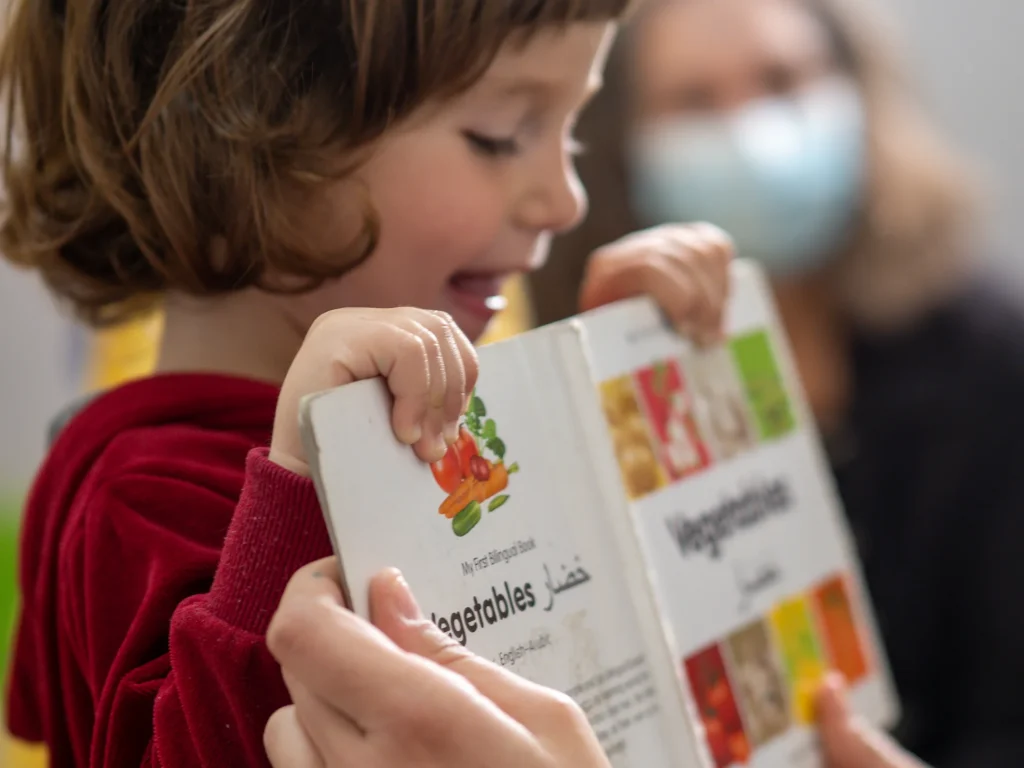
Respect, understanding, curiosity, and connection – shape our approach to learning. Too often monitoring, evaluation, and learning (MEL) is disconnected from an organization’s mission and the stakeholders it aims to serve. This lack of alignment can lead to MEL efforts being experienced as rote and burdensome, or worse yet, culturally and contextually insensitive and extractive. Amna draws from its rich experience in localization, programmatic co-creation, refugee leadership, and trauma- and identify-informed practice to design MEL efforts that center curated and actionable learnings for all Amna stakeholders – refugees and forcibly displaced individuals; direct service community partners; local; national, and international governmental and non-governmental bodies; funders; and Amna staff itself.
These learnings aim to achieve the following interrelated goals:
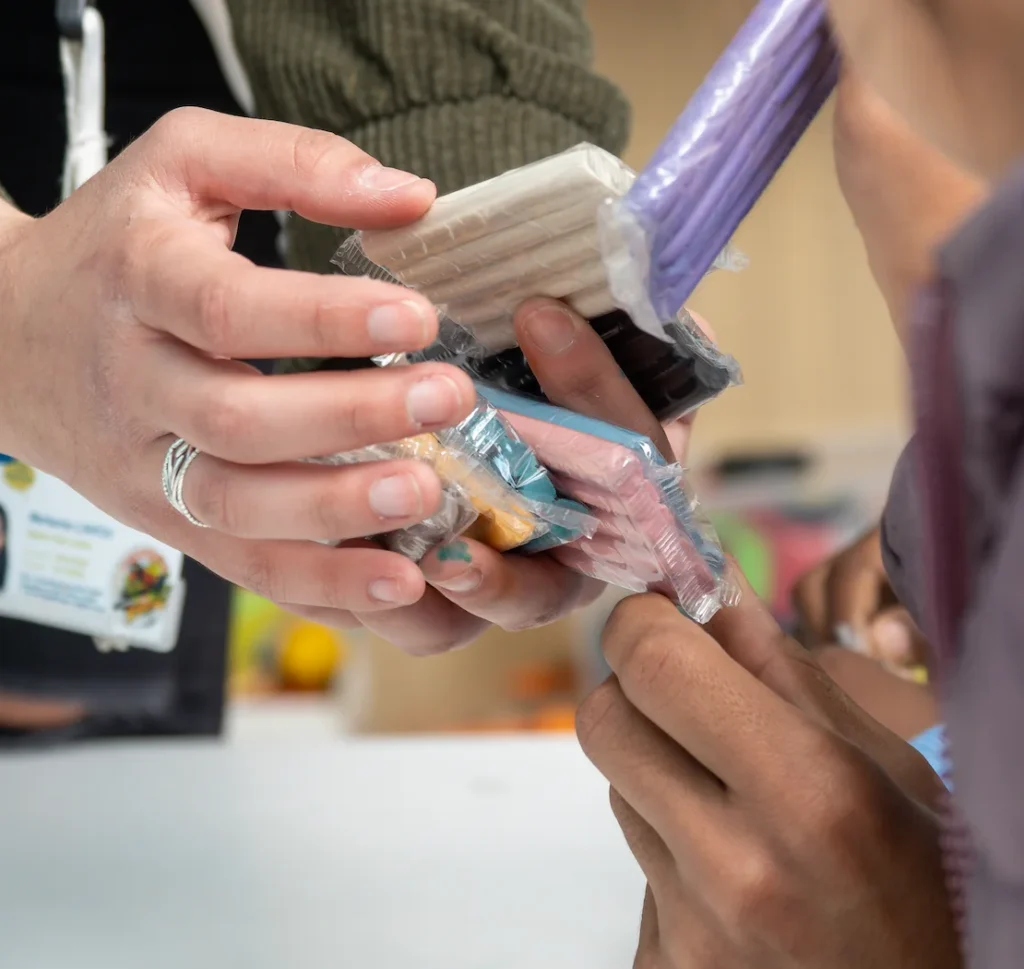
Rigorously detail our and our partners’ program fidelity
Describe program effects using multiple techniques and approaches that balance the priorities and resources of local communities with the shared interest and methodological thoroughness to explore causality
Adapt to the rapidly changing and often emergency contexts in which Amna works
Support cooperation and understanding among Amna’s communities of practice Inspire: apply creativity and innovation to both Amna’s programs and MEL efforts

Asylum seeker: Someone who has legally sought refuge in a third country.
Collective trauma: The impact that a traumatic event has on a community, society, or nation. It is important to recognise that while communities may experience collective trauma, each individual will have their own response.
Collective healing: A process in which individuals come together, either in person or remotely, to heal alongside one another.
Community resilience: The capacity of communities to engage with, survive, and recover from adverse events.
Co-regulation: A process between two or more people who, through connection, achieve greater emotional regulation together. For example, when a caregiver soothes a distressed child with a calm voice, and both feel steadier as a result.
Early childhood development (ECD): The period of a child’s life from 0 to 8 years of age, as defined by the UN Convention on the Rights of the Child. ECD services provide children with opportunities to explore, play, and learn with trained caregivers.
Emotional regulation: The ability to manage one’s emotions in challenging or traumatic situations. Self-regulation practices include music, movement, storytelling, breathing exercises, and creative expression.
Identity-informed approach: An approach that acknowledges and welcomes all components of a person’s identity, enabling individuals to share what they choose. It requires organisations to continuously reflect on and address power dynamics arising from group and individual identities.
Intergenerational trauma: The psychological impact of traumatic events on subsequent generations, which can affect the stress responses, genetic makeup, and behaviours of survivors’ children and descendants.
Psychosocial: A term describing the interactions of social, cultural, and other forces on an individual’s emotional state and wellbeing.
Psychosocial support: Interventions designed to improve a person’s wellbeing, guided by principles of safety, calm, self-determination, connection, and hope (IFRC).
Refugee: A person who has been forcibly displaced from their country of origin.
Resilience: The qualities that enable someone to adapt in the face of adversity and to recover from traumatic events despite their ongoing impact.
Safe spaces: Physical or virtual spaces where people are welcomed and can come together in structured, predictable environments that foster trust and rebuild relationships.
Toxic stress: The body’s response to prolonged, extreme, or sudden stressors such as violence, abuse, or neglect.
Trauma: The body’s emotional and physiological response to a traumatic event — a response that lives on in the body after the event itself, often causing a person to remain stuck in the past.
Trauma-informed approach: An approach that acknowledges the possible impact of trauma on individuals, families, and communities, reflected in relational practices and organisational structures that create predictability and opportunities for healing.
Trauma-sensitive practice: The intentional creation of spaces and relationships that are nurturing and healing, without assuming that everyone is traumatised.
Values-based practice: An organisational approach in which stated values — such as respect or equity — inform all decision-making, policies, procedures, and interactions.
Vicarious trauma: An empathetic response experienced by those working with people who have experienced trauma, in which the “helper” absorbs some of the stress or trauma of those they support.
Youth: Defined by the United Nations as individuals between the ages of 15 and 24, though national definitions vary.